Exhibition Design Agency in Munich: Process, Services, and Selection Criteria
Oct 21, 2026 · by Christoph Lang
The trade show is booked, the hall has been selected, and the date is fast approaching. What’s missing now is someone who can turn a booth space into a compelling experience: with an idea that draws visitors in, a booth that guides them, and processes that continue to have an impact long after the show is over.
That’s exactly what Messedesign München is here for: concept, design, and execution all work together to ensure that a premiere lasting just a few days doesn’t turn into an improvised affair.
This guide explains what a trade show design agency does, how a project unfolds from the initial briefing through to dismantling, and how to identify the right agency for you. We’ve written separate articles on costs, lead generation, and booth planning, which we’ll reference throughout.
What does a trade show design agency do?
There are several terms that get mixed up when it comes to trade show booths. Clearly distinguishing between them makes planning easier:
- Exhibition Design: Concept and Design. Objectives, message, space, visitor flow, graphics, and brand architecture.
- Exhibition and Booth Construction: the production and setup of the booth, including construction, materials, technology, and assembly.
- General Contractor: A provider that combines concept, construction, and logistics and serves as the central point of contact for these services.
The exhibitor remains responsible to the trade show organizer for ensuring that the booth complies with the technical guidelines. The contract should therefore clearly specify who is responsible for which services internally and what each party is accountable for. At das formt, the focus is on concept development, graphic design, and brand architecture; construction is handled by experienced partners. This results in a coordinated, comprehensive solution.
The Process of a Trade Show Project, from Briefing to Breakdown
Every project moves at its own pace, but the process remains similar:
- Nine to twelve months in advance: Reserve space. The trade show, hall, and booth size are determined at the outset and set the framework for everything that follows.
- Briefing and concept. For a truly well-thought-out design, we recommend allowing at least four to six months before the trade show begins. The objective, target audience, message, and budget are clarified before any sketches are drawn.
- Design and approval. The floor plan, visualizations, and graphics are developed in consultation with you; ultimately, you approve the design.
- Submit plans to the trade show organizer. Depending on the size and construction type, booth plans must be submitted to Messe München for approval. The deadlines are listed in the exhibitor documents for each event; late submissions may incur additional costs.
- Production. Construction, printing, and technical components are produced, usually by our stand-building partners.
- Setup. The booth is assembled in the hall and inspected.
- Trade Show. The big debut: conversations, engagement, and booth staff who convey the message.
- Follow-up and Dismantling. Contacts are followed up on, and the booth is dismantled, stored, or reused.
The article "Before, During, and After the Trade Show" explains how visitors to a booth are systematically turned into leads.
Booth Concept: Why It Comes Before the Design
Just because a booth looks good doesn’t automatically mean it serves a purpose. That’s why every project begins with four questions: What goal should the booth achieve? Who do you want to reach? What message should visitors remember? And how does the space guide visitors from the first impression to a conversation?
The answers form the basis for the concept, and the concept leads to the design—not the other way around. The article on the 4-Zone Model explains how a booth can be divided into zones. To learn how space and dwell time are related, read “Architecture of Success.”
Prefabricated, custom, or modular: Which construction method is best for which situation?
- Modular construction uses standardized, reusable components. It requires a lower initial investment and can be set up quickly. It’s a good fit if you exhibit several times a year and want your booth to remain flexible.
- Modular concepts consist of custom-designed elements that can be recombined and used across multiple trade shows. They combine a unique style with reusability and conserve resources. Read more about this in “Sustainability as a Status Symbol.”
- Custom-built stands are designed and constructed for a single event. They offer the greatest design freedom but are more complex in terms of construction and logistics. They are particularly worthwhile for a product launch or an anniversary celebration.
The article "Planning a Trade Show Booth Budget" explains what costs you should factor in for each type of booth design.
How to Spot a Good Trade Show Design Agency: Seven Criteria
These seven points will help you make your choice, regardless of which agency you ultimately decide on:
- Strategy comes before rendering. The starting point is the goal, the target audience, and the message—not a pretty picture.
- References on a comparable scale. Projects with similar booth sizes and in the same industry demonstrate that we’re familiar with the requirements.
- Established partners in trade show construction. Whether in-house or with trusted partners: what matters most is that the concept and execution are aligned.
- A single point of contact from briefing through dismantling. One person who knows your project and keeps track of everything.
- Reusability of the booth. The booth can be adapted and used multiple times, which lowers the cost per use.
- Integration with other communication channels. The booth, website, brochures, and social media all tell the same story.
- Follow-up and leads. The agency thinks beyond the trade show itself: contacts are recorded and tracked.
Trade Show Design in Munich
Munich is a major trade show destination. Trade shows and conferences for many industries take place at the Messe München exhibition grounds, as well as at the ICM and the MOC. BAU returns from January 11 to 15, 2027; EXPO REAL follows from October 4 to 6, 2027; and Intersolar Europe runs from June 8 to 10, 2027. bauma, analytica, and IFAT do not take place every year. Exhibitors in Munich plan according to Messe München’s technical guidelines and benefit from our proximity: We’re based in Munich’s Maxvorstadt district, on-site coordination is straightforward, and collaboration works seamlessly even in a hybrid format.
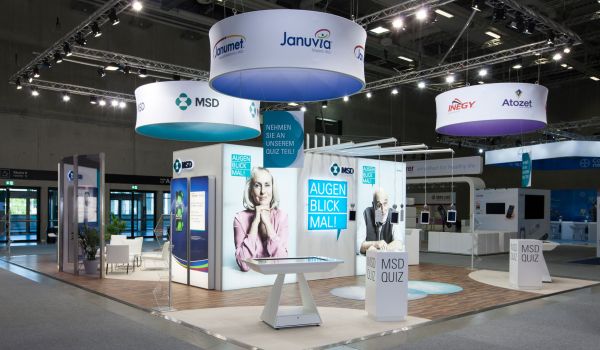
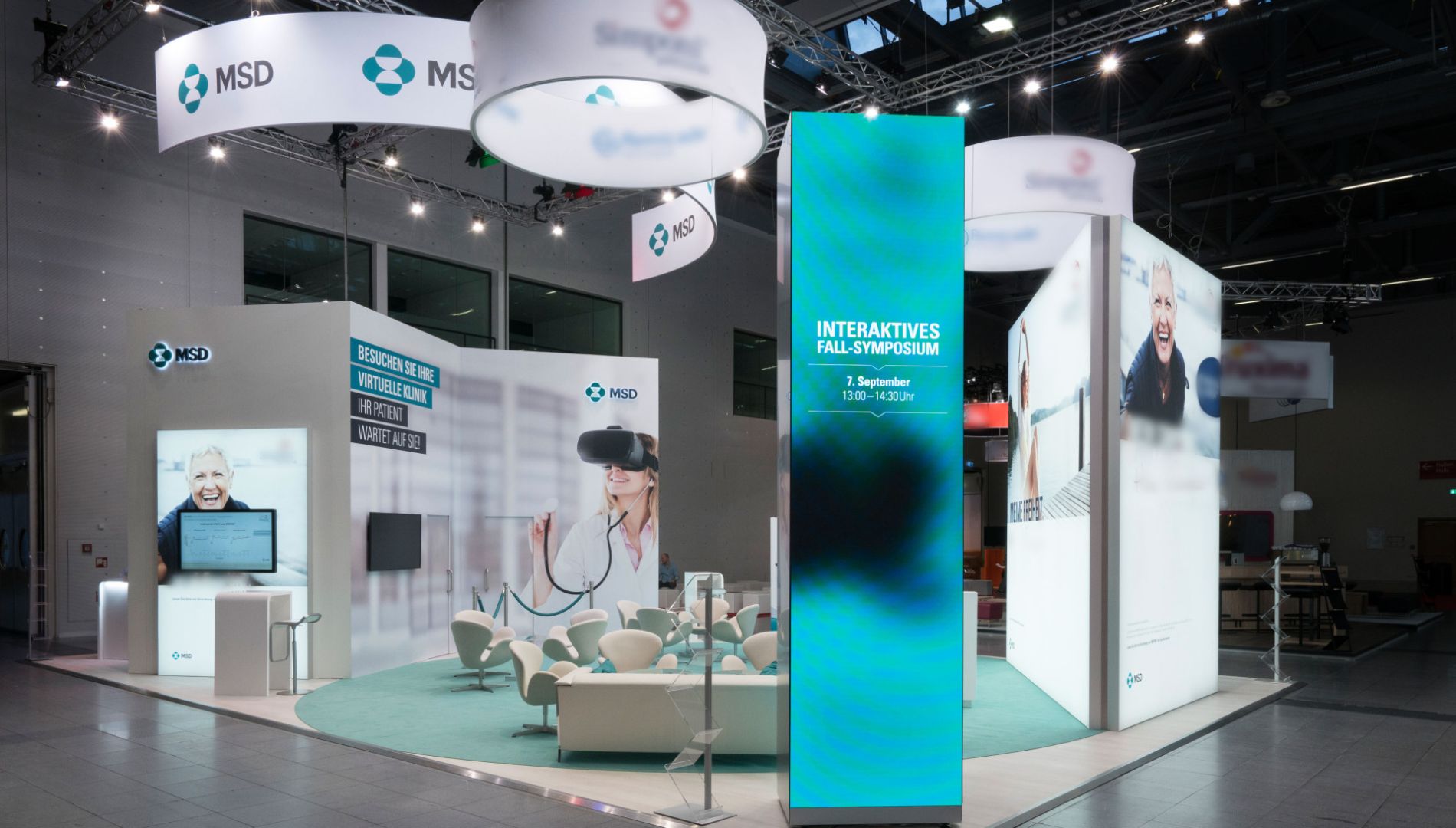
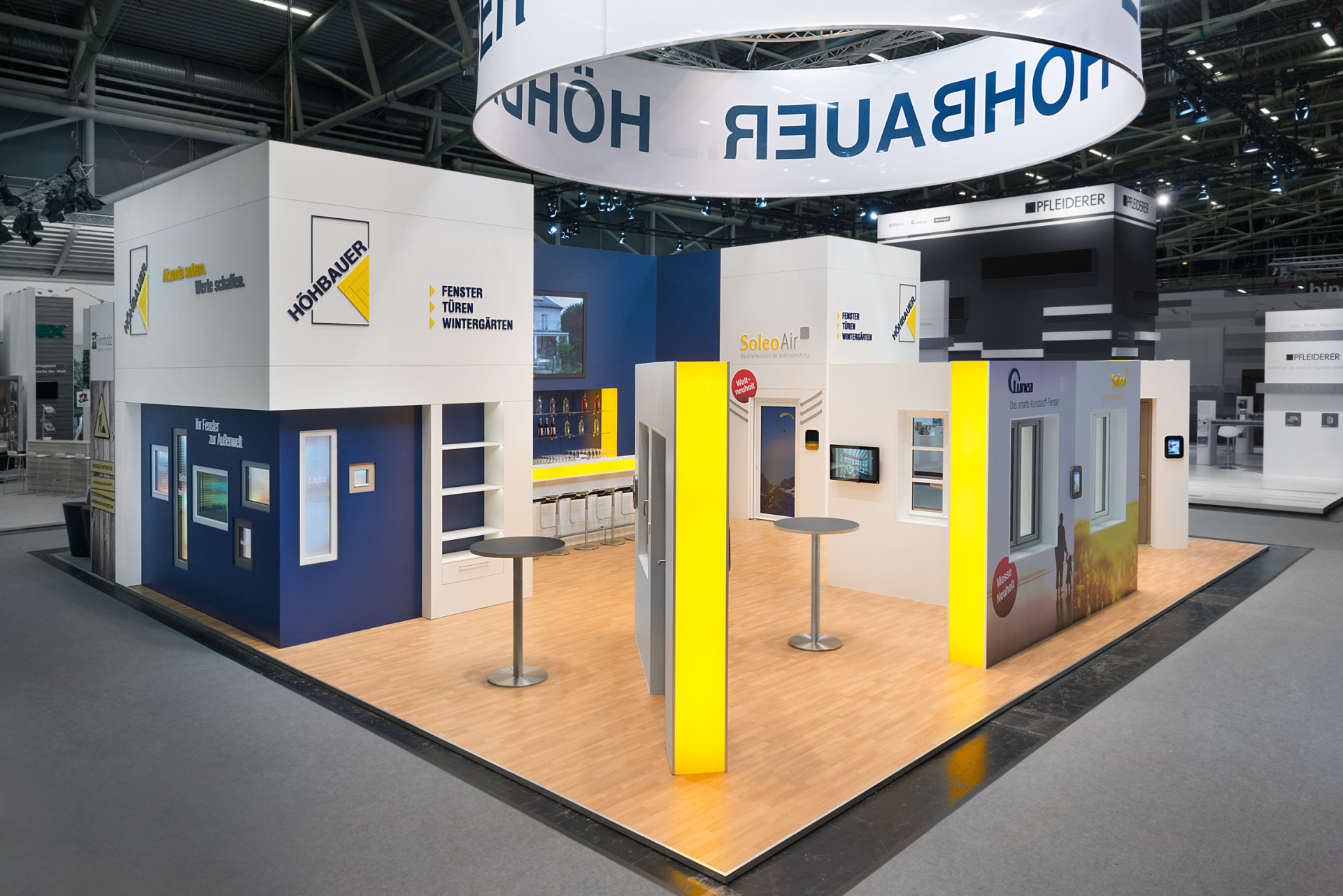
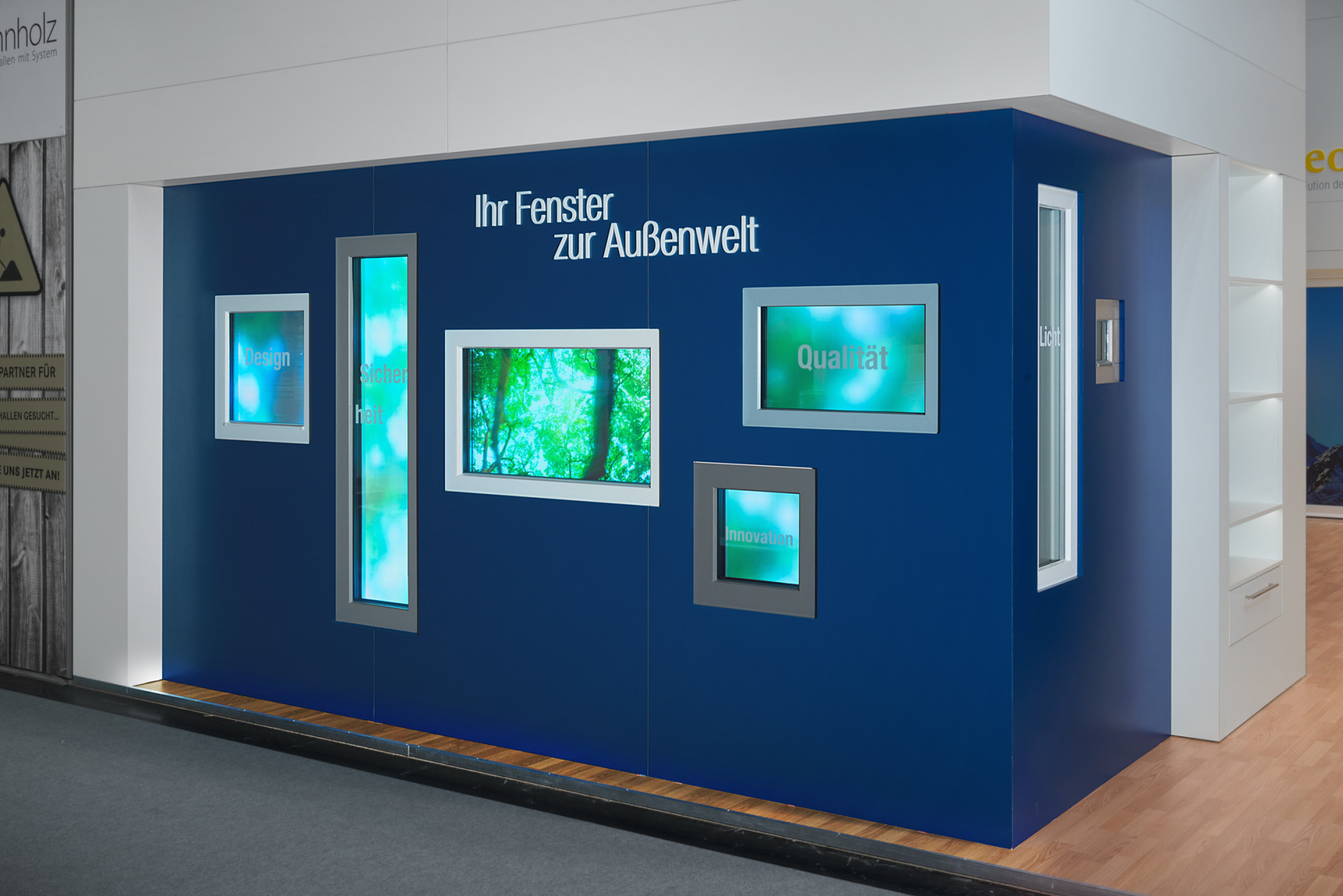
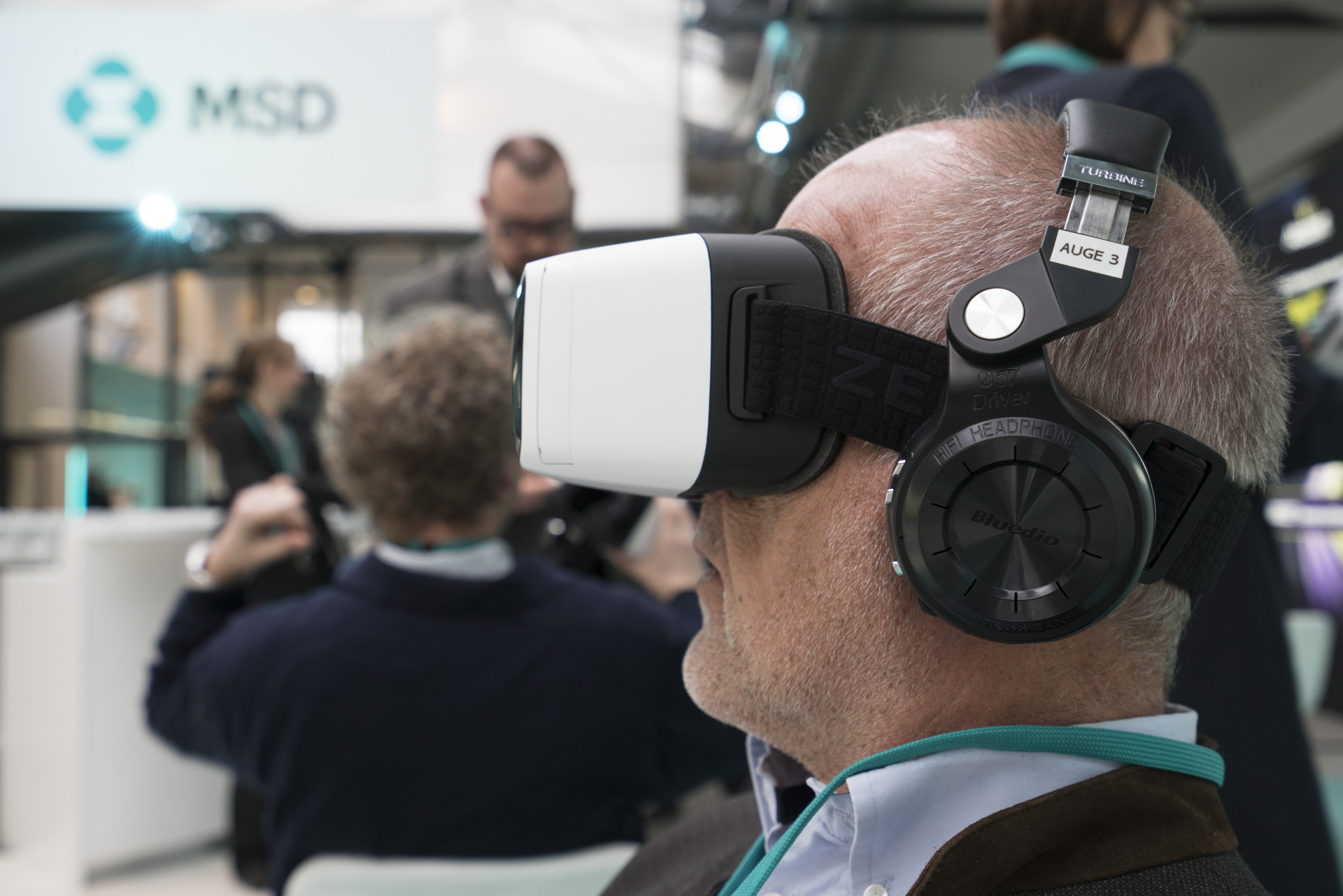
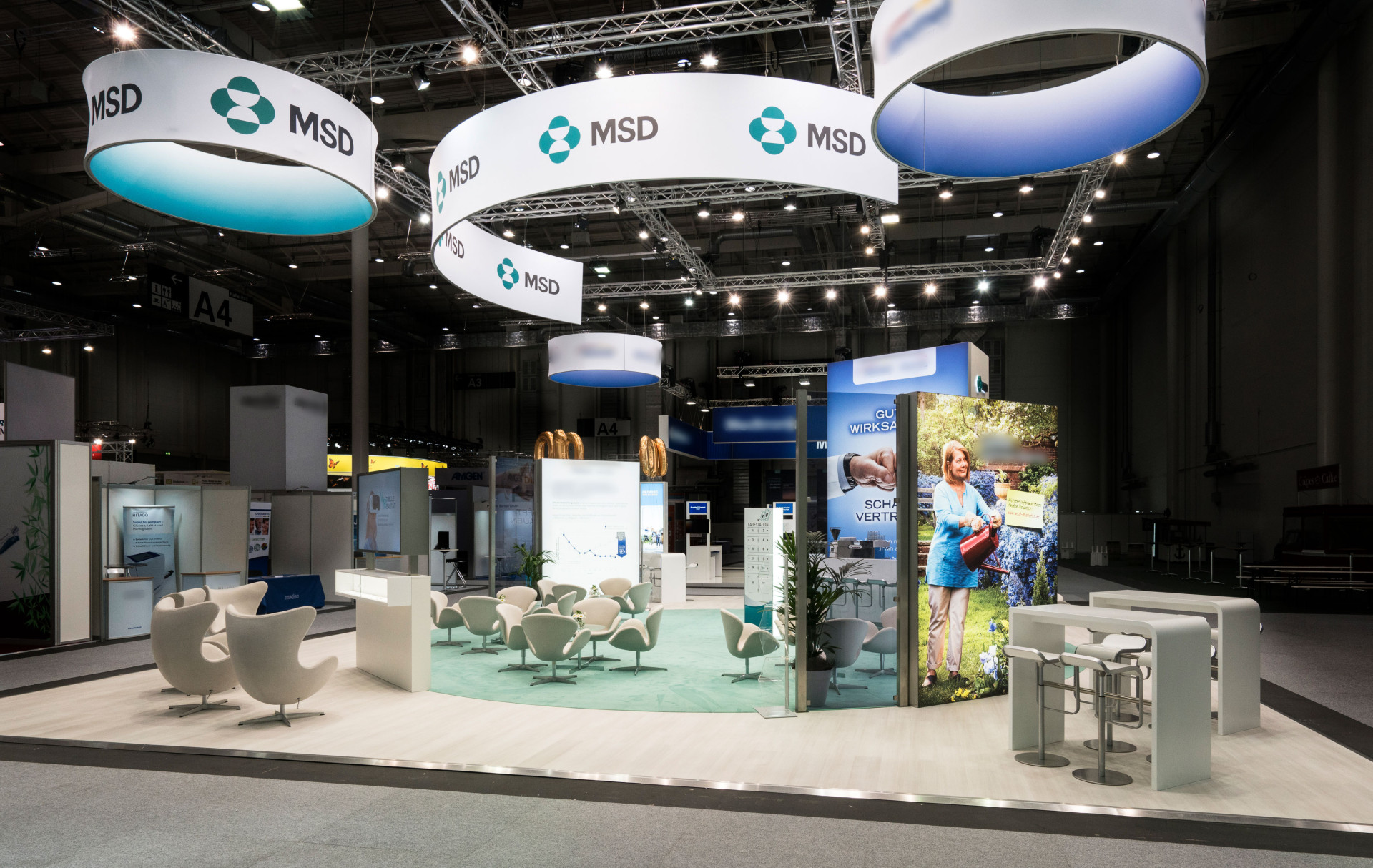
Our projects illustrate what this can look like: the trade show design for MSD Sharp & Dohme, corporate design, trade show design, and wayfinding system for the Goethe-Institut, and most recently, the complete presentation of the Siebendächer Baugenossenschaft at the Memmingen Education Fair, featuring a booth, flyers, multimedia presentation, and an interactive game. You can find an overview of our services on the Trade Show Design Munich page.
Conclusion
A trade show appearance is a temporary debut: months of preparation for just a few days on stage. Those who plan the concept, design, and execution early on give this debut the best chance of success. Using the workflow, construction methods, and the seven criteria from this guide, you can assess what your exhibition needs and who you’d like by your side to make it happen. If you’d like to discuss this further, please feel free to contact us—with no obligation.
Frequently asked questions
Messedesign umfasst Konzept und Gestaltung: Ziele, Botschaft, Besucherführung, Grafik und Markenarchitektur. Messebau ist die technische Realisierung mit Konstruktion, Material und Aufbau. Beides greift ineinander. Bei das formt kommen Konzeption und Design aus einer Hand, den Bau setzen erfahrene Partner abgestimmt um.
Die Standfläche wird häufig neun bis zwölf Monate vor der Messe gebucht. Mit der Konzeption sollten Sie mindestens vier bis sechs Monate vor Messebeginn starten. Bei großen Leitmessen oder aufwändigem Sonderbau kann ein noch früherer Start sinnvoll sein, denn Konzept, Design und Abstimmung mit der Messe brauchen Zeit.
Das hängt von Umfang, Komplexität und Standgröße ab. Konzeption und Design machen oft nur einen kleinen Teil des Gesamtbudgets aus, entscheiden aber mit, ob der große Teil sein Geld wert war. Orientierung gibt der Beitrag Messestand-Budget planen; ein Angebot entsteht nach einem Erstgespräch, in klare Arbeitsschritte gegliedert.
Bei regelmäßigen Auftritten meist ja. Modulare Systeme lassen sich anpassen, neu bespielen und auf mehreren Messen nutzen, das senkt die Kosten pro Einsatz. Für einen einzelnen Anlass mit hoher strategischer Bedeutung kann ein Sonderbau die bessere Wahl sein.
Wir begleiten den gesamten Prozess von der Konzeption bis zur Umsetzung. Auf- und Abbau erledigen unsere Partner aus dem Standbau, abgestimmt mit uns und mit den Vorgaben der Messe, sodass Sie eine durchgängige Lösung erhalten.