The Era of Visual Noise: Why AI Is Driving Brands Toward Visual Radicalization
Aug 28, 2026 · by Christoph Lang
Generative AI tools have reduced the cost of creating visual content to zero. What used to take photographers, illustrators, and designers days to produce can now be created in seconds with a simple prompt.

The consequences for the market, however, are devastating: We are experiencing unprecedented visual inflation. Feeds, websites, and campaigns are drowning in a sea of polished, interchangeable AI-generated images and cookie-cutter designs.
When quality is replaced by mediocrity, the differentiating value of mediocre designs drops to zero. To even be noticed in this age of visual noise, brands must make a radical decision: they must sharpen their visual identity without compromise.
Those who get lost in the crowd don’t just lose attention—they lose trust and pricing power.
Market Homogenization: The Phenomenon of the “Digital Mash”
Generative algorithms draw on the existing average of the internet. Conversely, this means that AI-generated design reproduces and reinforces the visual mean. When hundreds of B2B companies use the same AI prompts to depict “innovative technology” or “empathetic customer service,” a creeping alienation from their own identity sets in.
The user’s brain reacts to this visual oversaturation with “banner blindness 2.0.” Anything that looks like a generic AI average is filtered out as irrelevant by the subconscious in milliseconds. The attempt to remain visible through sheer quantity of AI images leads directly to invisibility.
The Lever: “Distinctive Brand Assets” as an Uncopyable Shield
In branding practice, a principle coined by marketing researcher Byron Sharp is gaining new traction: “Be Distinctive, Not Just Different.” In the age of generative AI, the primary goal is no longer simply to formulate a slightly different message, but rather to anchor unmistakable visual cues—known as “distinctive brand assets”—in the customer’s memory.
A Distinctive Brand Asset is a visual element that makes your brand instantly recognizable, even if your logo were covered up:
- Proprietary typefaces (brand fonts): Custom-designed typography that no AI tool can randomly replicate.
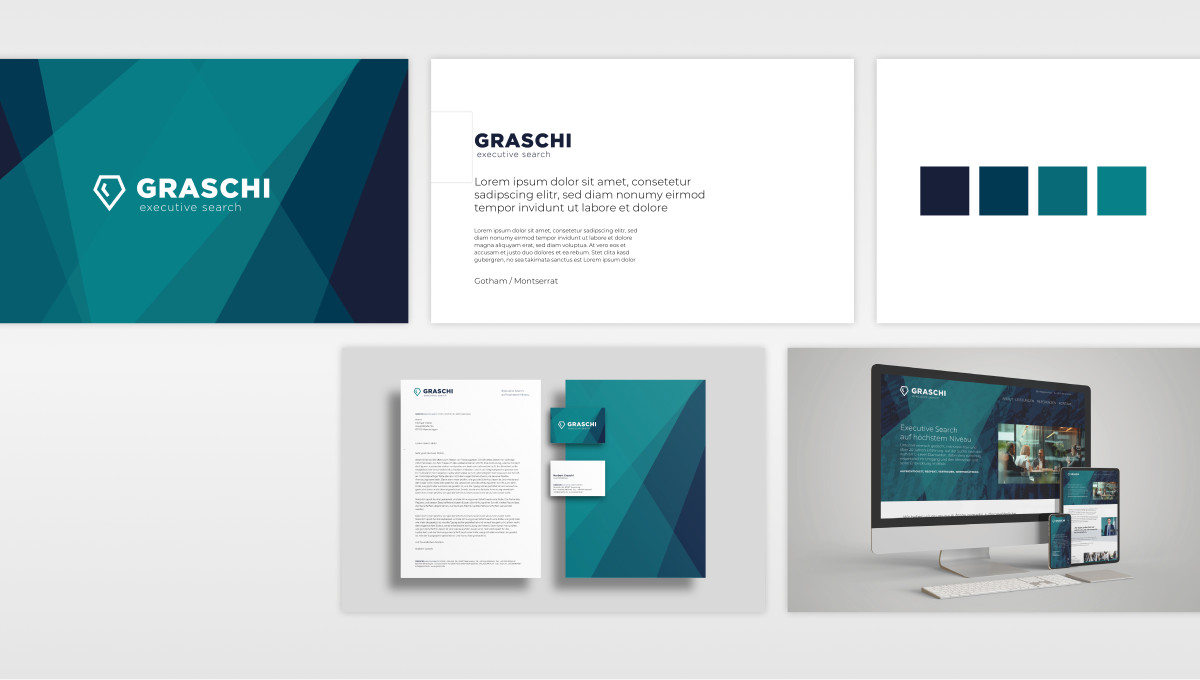
- Radical Color Dominance: The bold use of an unconventional primary color that breaks with industry standards.
- Haptic and analog interfaces: A deliberate return to the physical—from high-quality editorial print to distinctive booth materials at trade shows.
The Strategy: Three Steps to Visual Radicalization
To gain the upper hand in the visual noise, companies must thoroughly audit their corporate design:
- Pillar 1: Conduct the “Generic Audit”: Eliminate all visual elements that could theoretically be generated by a competitor using an AI prompt. Replace sterile renderings and standard stock photos with authentic, documentary-style imagery or highly abstracted, proprietary brand forms.
- Pillar 2: Focus on repetition rather than variety: The greatest danger in corporate design is the internal desire for constant novelty. Brand strength is built through the disciplined, consistent repetition of the same visual anchors over the years.
- Pillar 3: The courage to embrace visual rough edges: AI produces harmonious smoothness. Radical brand leadership dares to create breaks—whether through unexpected typographic contrasts, uncompromising grid systems, or a deliberately reduced color palette.
Conclusion: Authenticity as a Luxury Good
AI isn’t going away—it’s becoming a standard tool for production. But that’s precisely why the strategic mindset behind design will become a company’s most valuable asset. A visually radical brand erects barriers against the sea of sameness and signals to the market: We are the original.
Anyone who would rather not leave that stance to chance starts with brand development — not with the next image.
Frequently asked questions
Distinctive brand assets are visual elements that make a brand instantly recognisable, even without its logo. Typical examples are a proprietary typeface, a consistently owned primary colour, or recognisable shapes and materials. They only build equity when they are repeated unchanged over several years.
Generative models are trained on the average of the internet and return exactly that mean. When many companies use similar prompts for similar messages, visual sameness is the inevitable result. The output looks technically clean but interchangeable, and viewers dismiss it as irrelevant within milliseconds.
Through elements no prompt can produce. These include proprietary typography, an unconventional primary colour, documentary rather than generated imagery, and physical touchpoints such as print or exhibition design. Disciplined repetition matters most, because recognition is built through consistency rather than through new motifs.
A generic audit reviews every visual building block against a single question: could a competitor recreate this element with an AI prompt in minutes? Anything that fails the test – stock photography, standard renderings, generic icons – is replaced with proprietary, unmistakable brand forms.
No. AI is an efficient production tool and is becoming the standard. It only becomes a problem when it replaces design judgement. A workable rule is to use AI for variants and intermediate steps, and reserve defined brand assets and authentic imagery for everything meant to build recognition.