Medical Practice Website Relaunch: What a Modern Medical Practice Website Really Needs to Do in 2026
Jun 20, 2031
Many medical practice websites were created seven, eight, or ten years ago—at a time when a website’s primary purpose was to provide information on office hours and directions. The problem: These websites are still online today, even though patients’ expectations and technical capabilities have changed fundamentally. The result is a silent gap between what your practice offers medically and what your website shows.
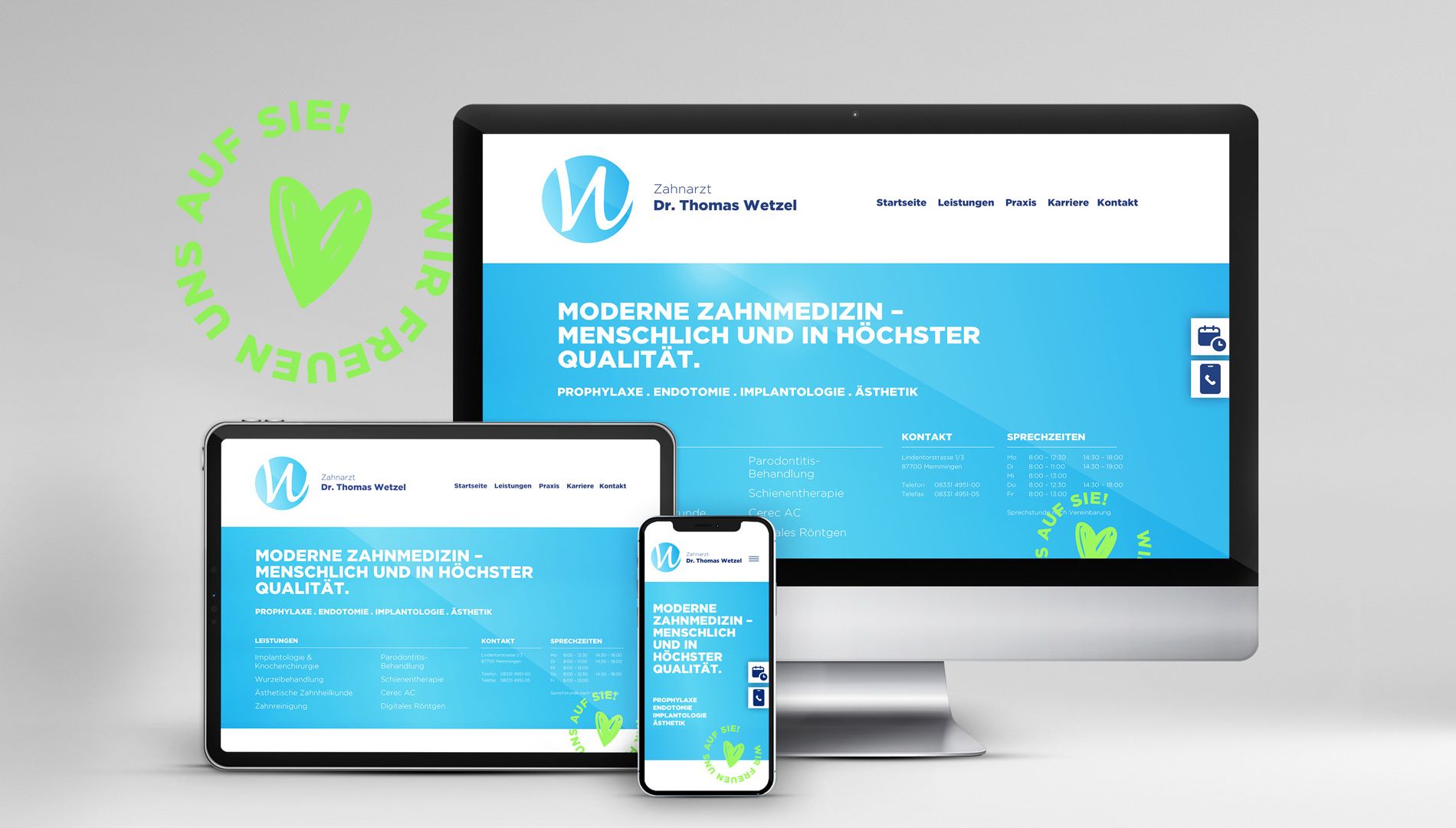
A practice website that merely provides information but doesn't convert visitors will no longer be a digital business card in 2026—it will be a missed opportunity.
The good news: A relaunch isn’t an end in itself, but one of the most effective investments a practice can make today. The bad news: Most relaunch projects fail not because of technical issues, but because no one clearly defined beforehand what the new website is actually supposed to accomplish. This article summarizes what really matters in 2026—and thus also brings together the individual topics we’ve explored in depth over the past few weeks.
1. Mobile-first is not an option—it’s the foundation
Today, the vast majority of patient searches take place on smartphones—usually in urgent situations: a toothache on a Sunday evening, a rash that won’t go away. Anyone who opens a website at such a moment that isn’t intuitive to navigate with their thumb will leave and keep searching. A modern dental practice website isn’t designed for desktop and then adapted for mobile devices; rather, it’s designed from the ground up for small screens—with large touch areas, fast loading times, and navigation that works without scrolling through endless menus.
2. Online appointment scheduling instead of "phone roulette"
Few things frustrate patients more than being stuck on hold for minutes on end during office hours just to schedule an appointment. An integrated online appointment booking system completely eliminates this friction—for both patients and your practice team, which will see a noticeable reduction in workload. It’s important to note that the booking feature shouldn’t come across as a standalone tool, but should be visually and functionally embedded within the practice’s brand identity.
3. Local SEO: Be Found When It Counts
Even the best website is of little use if it doesn't appear in local search results. Patients don’t search for “dentist”; they search for “dentist in Munich Schwabing” or “dentist near me”—and in the vast majority of cases, they choose one of the first three practices in Google’s so-called Local Pack. A modern dental practice website is therefore designed—both technically and in terms of content—to maximize local visibility: well-organized service pages for each treatment, a fully maintained Google Business Profile, and a site structure that clearly signals to Google where you’re located and who your patients are.
4. The Patient's Journey Instead of an Information Graveyard
Many older practice websites are essentially digitized practice flyers: a list of services, a team photo, and a contact form. What’s missing is a consideration of the actual patient journey—from the initial, uncertain search, through building trust, to scheduling an appointment. A modern website answers the questions a patient asks themselves at every stage: Is this practice qualified to handle my problem? Does the team seem approachable? What will my first visit be like? Answering these questions proactively reduces the uncertainty that prevents many patients from reaching out.
5. Visual Language and Design That Build Trust
In the healthcare sector in particular, a website’s visual design plays a decisive role in whether a patient builds trust or clicks away. Generic stock photos of smiling models in white coats tend to be more off-putting than reassuring these days—patients immediately recognize inauthentic imagery. Authentic photography of practice spaces and the team, a consistent color scheme, and well-thought-out typography convey exactly what matters in healthcare: credibility, professionalism, and humanity all at once.
6. By 2026, accessibility will no longer be a bonus
With the Act to Strengthen Accessibility, the requirements for digital services—including those in the healthcare sector—have increased significantly. A modern medical practice website ensures sufficient contrast, a clear font size, alternative text for images, and usability that works even without a mouse. This is not only a legal issue but also a matter of the target audience: Medical practices with older patients or those with disabilities, in particular, benefit directly from accessible design.
7. A website that grows with the practice
Whether it’s new treatment methods, an additional location, or a dedicated careers page for recruiting new professionals—a modern practice website is structured from the start to allow for expansion without having to be rebuilt every time a change is made. A well-designed content management system and a clear information architecture form the foundation for long-term investment security.
Conclusion: A relaunch as a branding project, not a technical update
The biggest mistake people make when relaunching a practice website is to view the project purely from a technical perspective—new design, new system, done. In reality, a practice website is always a branding project as well: It conveys what your practice stands for, how it treats patients, and what patients can expect from their visit. Anyone who treats the relaunch exclusively as an IT issue will end up with a technically flawless site that still fails to win anyone over.
That’s why we always view a website relaunch as part of a larger practice marketing strategy—integrated into your brand identity, patient communication, and long-term positioning. After all, a new website shouldn’t just look more modern than the old one. It should measurably help you convert more of the right patients into actual appointments.
Are you considering revamping your practice’s website? In a no-obligation initial consultation on our practice marketing services, we’ll show you where your current website is leaving untapped potential—and what a relaunch could look like in concrete terms.